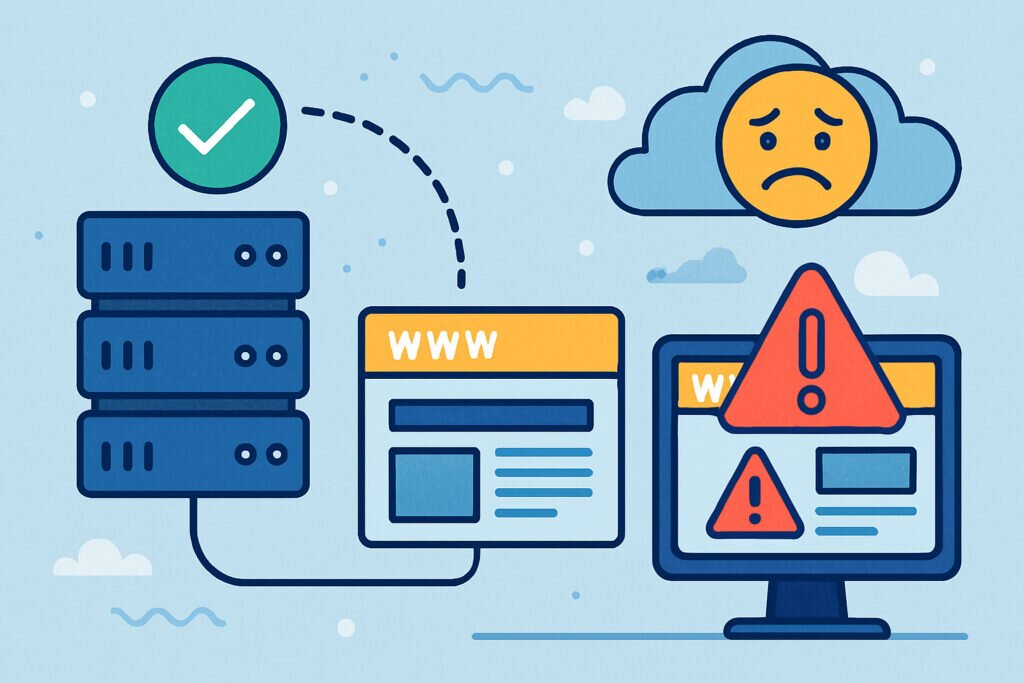
If you’ve ever experienced your website going down at the worst possible moment – maybe during a product launch, or right when a potential client was trying to reach you – you know exactly how frustrating poor hosting can be. The quality of your web hosting doesn’t just affect speed; it’s the single biggest factor determining whether your site stays online or leaves visitors staring at error messages. Let me walk you through why this matters and what you should actually look for.
Why Your Hosting Provider Makes or Breaks Uptime
Your hosting provider is basically the foundation your entire website sits on. Think of it like a building – you can have the most beautiful structure in the world, but if the foundation is cracked and unstable, everything else becomes irrelevant. I learned this the hard way years ago when I chose a bargain hosting provider for a client project. The price was great, but the site went down three times in the first month. Each outage meant lost sales and embarrassed phone calls.
Quality hosting providers invest heavily in redundant systems, backup power supplies, and professional monitoring. Budget hosts often oversell their servers, cramming hundreds or even thousands of websites onto machines that can barely handle the load. When one site gets a traffic spike, everyone else suffers.
Server Hardware and Infrastructure Matter More Than You Think
The physical equipment running your website makes a massive difference. Premium hosting companies use enterprise-grade servers with redundant components – if one hard drive fails, another takes over instantly. They have multiple power supplies, network connections, and cooling systems. Everything is designed so that no single point of failure can take your site offline.
Budget providers typically use consumer-grade hardware that’s more prone to failure. They might not have backup systems in place, which means when something breaks, your site goes down until a technician manually fixes it. This could take hours or even days depending on their support capacity.
Network Connectivity and Bandwidth
Your hosting server needs a fast, reliable connection to the internet. Quality providers connect to multiple network backbones, so if one connection fails, traffic automatically routes through another path. They also provision generous bandwidth allowances and don’t throttle your connection during traffic spikes.
I once monitored a client’s site that was on cheap hosting, and we noticed it would slow to a crawl every afternoon. Turns out the hosting company was overselling their bandwidth, and when other sites on the server got busy, everyone’s connection suffered. After moving to a better host, the problem disappeared completely.
Uptime Guarantees: Reading Between the Lines
Many hosts advertise ”99.9% uptime guarantees,” but what does that actually mean? It sounds impressive until you do the math – 99.9% uptime allows for about 8.7 hours of downtime per year. That’s still a full work day your site could be offline. Quality providers often guarantee 99.99% or even 99.999%, which translates to just minutes of allowable downtime annually.
More importantly, check what happens when they fail to meet their guarantee. Some providers offer service credits, but only if you notice the downtime and file a claim within a specific timeframe. Others automatically compensate you. The best providers rarely miss their targets because they’ve invested in infrastructure that actually delivers.
The Server Location Factor
Where your server physically sits affects both speed and uptime. If your target audience is in Europe but your server is in Australia, every request has to travel halfway around the world. This adds latency and creates more potential points of failure along the route.
Additionally, different data centers have different reliability standards. A facility in an area prone to natural disasters, power outages, or political instability carries higher risk. Premium providers operate multiple data centers across different geographic regions, allowing you to choose the location that best serves your audience while maintaining backup sites elsewhere.
Monitoring and Response Times
When something goes wrong, how quickly does your hosting provider notice and respond? Quality hosts have sophisticated monitoring systems that detect issues within seconds and automatically trigger failover systems or alert technicians immediately. Their support teams are available 24/7 with response times measured in minutes.
Budget providers might only check their servers periodically, and their support might be limited to business hours in a single timezone. I’ve seen situations where a site went down Friday evening and wasn’t fixed until Monday morning because nobody was monitoring over the weekend.
Backup Systems and Disaster Recovery
Even the best hosting providers occasionally experience problems. What separates good from great is how they handle disasters. Quality providers maintain multiple backup systems, regular automated backups of your data, and documented recovery procedures. If a server catches fire, floods, or gets hit by a meteor, they can restore your site from backups within hours.
Cheap hosting often means no backups, or backups that are stored on the same server as your live site – which does you no good if that server fails. Always verify your host’s backup policy and consider maintaining your own backups as well.
Common Myths About Website Hosting
Myth: ”Unlimited” hosting means unlimited resources. There’s no such thing as truly unlimited. Providers offering ”unlimited” plans have fine print limiting CPU usage, memory, or other resources. Exceed those hidden limits and your site gets throttled or suspended.
Myth: Shared hosting always means poor uptime. Not necessarily true. Quality shared hosting providers carefully manage server loads and provide excellent uptime. The key is choosing a reputable provider rather than the cheapest option.
Myth: More expensive always means better. While you generally get what you pay for, some providers charge premium prices for mediocre service. Research independently and check actual uptime statistics from monitoring services rather than just trusting marketing claims.
What You Should Actually Look For
When evaluating hosting providers, ask about their average uptime statistics over the past year, not just their guarantee. Check independent reviews from actual customers. Look for providers that offer transparent monitoring dashboards where you can see server status in real-time.
Consider whether they use modern technologies like SSD storage, CDN integration, and automated failover systems. Ask about their data center certifications and redundancy measures. Most importantly, test their support before you commit – send a pre-sales question and see how quickly and thoroughly they respond.
Your website uptime directly impacts your revenue, reputation, and search engine rankings. Choosing quality hosting is an investment, not an expense. The few extra dollars per month you might spend on reliable hosting pays for itself many times over by keeping your site online when it matters most.