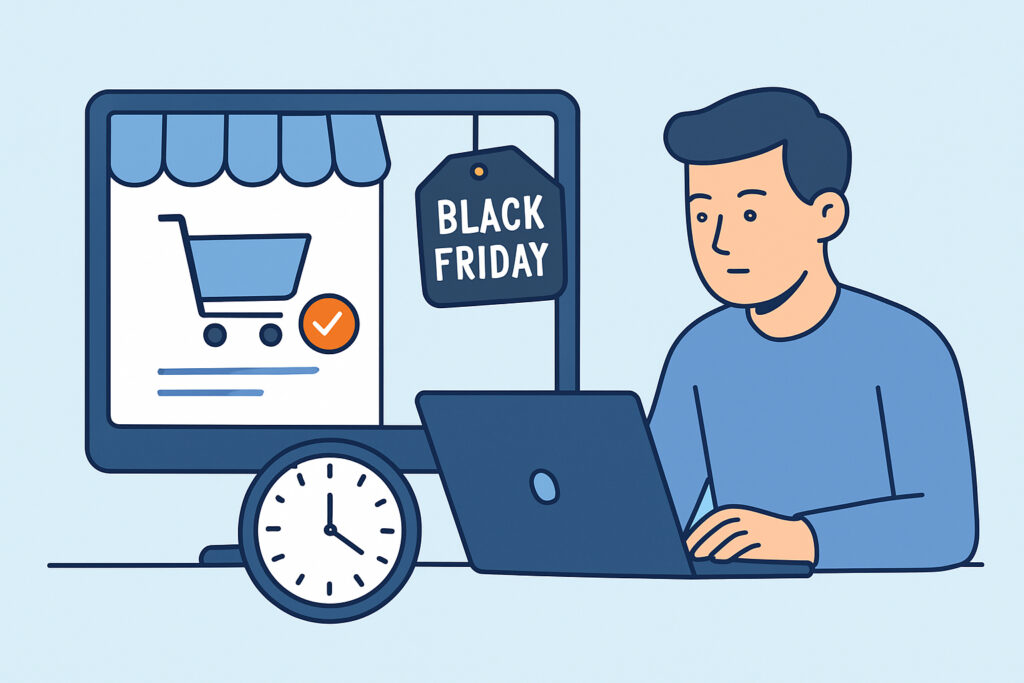
Black Friday and holiday sales periods represent the most critical revenue-generating windows for online retailers, making comprehensive monitoring of online stores during these peak traffic events absolutely essential for business success. During these high-stakes shopping seasons, even brief downtime can result in massive revenue losses, damaged customer relationships, and long-term brand reputation issues.
The financial stakes during holiday shopping seasons are staggering. A mid-sized e-commerce store that typically processes $50,000 in daily sales might see volumes spike to $300,000 or more during Black Friday weekend. When traffic increases by 500-1000%, systems that normally handle regular loads gracefully can buckle under pressure. This creates a perfect storm where the potential for technical failures peaks at precisely the moment when revenue losses from downtime would be most devastating.
Understanding Holiday Traffic Patterns and Their Impact
Holiday shopping traffic doesn’t follow normal patterns. Unlike gradual traffic increases that allow systems to scale organically, Black Friday creates sudden, massive spikes that can overwhelm infrastructure within minutes. These traffic surges often reveal weaknesses in database connections, payment processing systems, and third-party integrations that perform adequately under normal conditions.
The timing of these surges compounds the challenge. Black Friday traffic typically peaks between 8 PM and midnight on Thanksgiving Day, followed by sustained high volumes throughout the weekend. Cyber Monday brings another surge focused on work-hour traffic. Each peak tests different aspects of your infrastructure, from frontend web servers to backend fulfillment systems.
Database connection pools that seem adequate for regular traffic often become bottlenecks during these periods. Payment processors may introduce additional latency as they handle increased transaction volumes across all their clients simultaneously. Content delivery networks can become overwhelmed in specific geographic regions where promotional campaigns drive concentrated traffic.
Critical Systems That Require Enhanced Monitoring
During holiday sales periods, standard website monitoring isn’t sufficient. Online stores rely on multiple interconnected systems, each representing a potential failure point that could crash the entire shopping experience.
The checkout process deserves special attention. A homepage that loads quickly means nothing if customers can’t complete their purchases. Shopping cart functionality, payment processing, inventory management systems, and order confirmation processes all need continuous monitoring. Many retailers discover too late that their payment gateway introduces fatal delays under high load, effectively turning away customers at the final purchase moment.
Inventory management systems face unique pressures during sales events. Real-time inventory updates become critical when popular items sell rapidly. Systems that don’t accurately reflect stock levels in real-time can create oversell situations, leading to cancelled orders and frustrated customers long after the sale ends.
Search functionality often degrades under heavy load, yet customers rely heavily on search during time-pressured shopping events. Product recommendation engines, customer account systems, and mobile-responsive design elements all need dedicated monitoring during peak periods.
Setting Up Proactive Alert Systems
Standard monitoring intervals prove inadequate during high-traffic sales periods. While one-minute checks work for normal operations, holiday monitoring requires more frequent health checks – potentially every 30 seconds for critical pages like checkout and payment processing.
Alert thresholds need adjustment for holiday periods. Response times that seem acceptable during normal traffic become problematic when customers are in urgent buying mode. A checkout page that normally loads in 2 seconds might need monitoring alerts set at 1.5 seconds during Black Friday, when even slight delays can trigger cart abandonment.
Escalation procedures become crucial during holiday weekends when skeleton crews often staff technical support. Multi-channel alerting through email, SMS, and phone calls ensures critical issues reach someone who can respond immediately, even during off-hours.
Geographic monitoring takes on heightened importance during holiday sales. Traffic patterns during these events often differ significantly from normal geographic distribution. International customers might represent a larger percentage of traffic, making multi-location monitoring essential for understanding the true customer experience.
Common Monitoring Mistakes During Peak Sales
A widespread misconception suggests that if the homepage loads correctly, the entire site functions properly. This assumption proves particularly dangerous during holiday sales when customers skip homepage browsing and navigate directly to specific product pages, categories, or checkout processes through promotional emails and social media links.
Many retailers make the mistake of monitoring only their primary website while neglecting mobile experiences. During holiday shopping periods, mobile traffic often exceeds desktop traffic, yet mobile-specific issues like touch interface problems, mobile payment processing glitches, and responsive design failures can go undetected without dedicated mobile monitoring.
Another critical oversight involves third-party service dependencies. Email marketing platforms, customer review systems, live chat widgets, analytics tracking, and social media integrations can all introduce failures that impact the customer experience. During high-traffic periods, these services face their own scaling challenges that can cascade into your site’s performance.
Focusing solely on uptime while ignoring response time monitoring represents a costly mistake during sales events. A site that’s technically “up” but loading slowly will hemorrhage customers during time-sensitive shopping periods. Customers shopping during limited-time sales have minimal patience for slow-loading pages.
Building a Holiday Monitoring Strategy
Effective holiday monitoring starts weeks before the actual sales events. Baseline performance metrics during normal traffic periods provide crucial comparison points for identifying when systems begin degrading under increased load. This historical data helps distinguish between normal traffic fluctuations and serious performance issues.
Load testing should simulate not just traffic volume increases but also the behavioral patterns specific to holiday shopping. Customers during sales events tend to visit more pages per session, spend more time comparing products, and place larger orders than typical shoppers. Your monitoring strategy needs to account for these different usage patterns.
Pre-event monitoring should include SSL certificate expiration checks, ensuring security certificates won’t expire during critical sales periods. Nothing kills holiday sales faster than browser security warnings appearing during checkout processes.
Consider implementing synthetic transaction monitoring that mimics complete customer journeys from product browsing through purchase completion. This approach catches integration failures and workflow problems that simple page-load monitoring might miss.
Response Time Benchmarks for Holiday Traffic
During holiday sales, response time expectations shift dramatically. Research consistently shows that customers shopping during time-limited promotional events abandon sites faster than those browsing casually. Page load times that customers tolerate during normal shopping become deal-breakers during flash sales and limited-time offers.
Product listing pages should load within 2 seconds during peak traffic periods. Shopping cart and checkout pages require even faster response times – ideally under 1.5 seconds – because customers at these stages have demonstrated clear purchase intent and represent the highest-value traffic your site receives.
Payment processing pages deserve the most aggressive monitoring thresholds. Any delays during payment submission risk not just losing individual sales but creating customer anxiety about security and reliability. Failed payment attempts during high-stress shopping periods often result in customers abandoning their carts entirely rather than retrying.
Mobile response times need separate benchmarks, typically 20-30% faster than desktop equivalents, because mobile users during holiday shopping often operate in distracting environments with less patience for delays.
Integrating Multiple Monitoring Approaches
Holiday monitoring requires layering multiple monitoring types to capture the full customer experience. Basic uptime checks verify that servers respond, but they don’t validate that complex e-commerce functionality works correctly under load.
API monitoring becomes essential during holiday periods because modern e-commerce sites depend heavily on APIs for inventory checks, pricing updates, payment processing, and order management. API failures often manifest as subtle functionality problems rather than obvious site outages, making them easy to miss without dedicated API monitoring.
Database performance monitoring helps identify bottlenecks before they cause visible customer-facing problems. Slow database queries that barely affect performance during normal traffic can bring sites to their knees during holiday rushes. Monitoring database response times provides early warning of impending problems.
Third-party dependency monitoring prevents external service failures from blindsiding your holiday sales. Payment processors, shipping calculators, tax calculation services, and fraud detection systems all introduce potential failure points that need active monitoring during peak periods.
Post-Holiday Analysis and Improvement
The period immediately following major sales events provides invaluable learning opportunities. Detailed analysis of monitoring data reveals patterns that inform improvements for future peak periods. Response time trends, error rate spikes, and traffic pattern analysis help identify infrastructure improvements and monitoring adjustments.
Customer complaints and support tickets from holiday periods often highlight monitoring blind spots. If customers report problems that your monitoring didn’t detect, those gaps need addressing before the next major sales event.
Performance data from successful holiday periods establishes benchmarks for future capacity planning. Understanding exactly how your systems behaved during peak loads helps predict when scaling becomes necessary as your business grows.
Frequently Asked Questions
How often should monitoring checks run during Black Friday and holiday sales?
Critical e-commerce functions like checkout and payment processing should be monitored every 30 seconds during peak sales periods. Homepage and product pages can be monitored every minute. This increased frequency helps detect and resolve issues before they impact significant numbers of customers during high-traffic periods.
What’s the most important metric to monitor during holiday sales?
While uptime remains crucial, response time monitoring often provides more actionable insights during holiday sales. Slow-loading pages drive away customers even when the site technically remains operational. Focus on end-to-end transaction completion times rather than simple page load metrics.
Should monitoring thresholds change during holiday traffic spikes?
Yes, alert thresholds need adjustment for holiday periods. Response times that seem acceptable during normal traffic become problematic when customers are in urgent buying mode. However, make these changes weeks before sales events and test thoroughly to avoid alert fatigue or missed critical issues.
Protecting Your Peak Revenue Periods
Successful online retailers treat holiday monitoring as a specialized discipline requiring dedicated preparation, enhanced vigilance, and rapid response capabilities. The combination of increased traffic, higher customer expectations, and compressed timeframes demands monitoring approaches that go far beyond normal website uptime checks. By implementing comprehensive monitoring strategies that cover all critical customer touchpoints, retailers can protect their most valuable revenue periods and build customer confidence that lasts well beyond the holiday season.