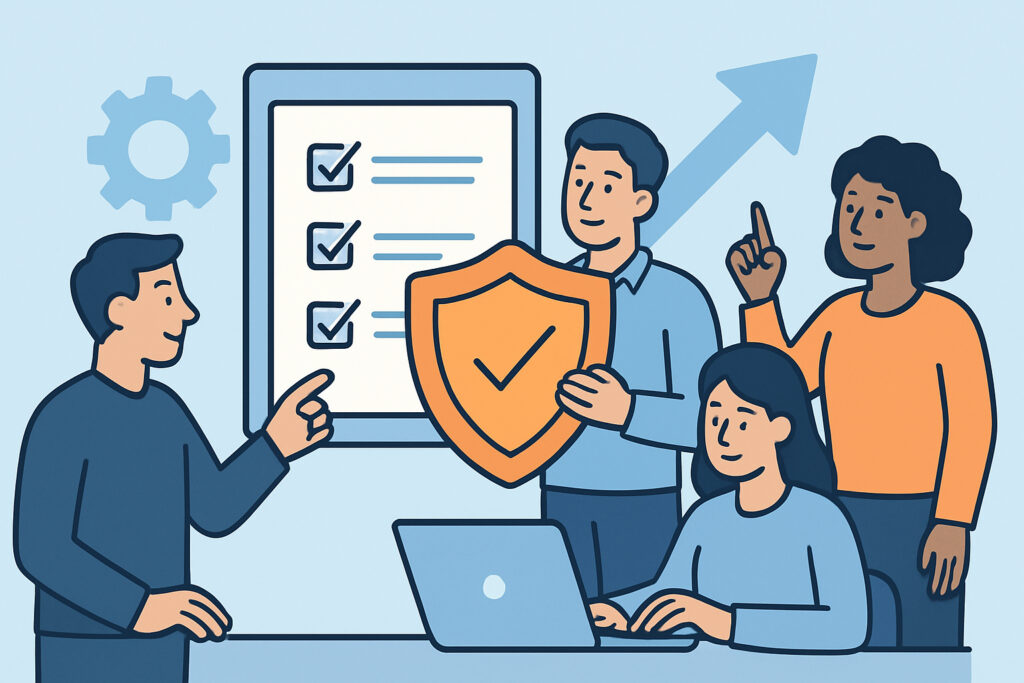
Building a culture of reliability transforms organizations from reactive firefighters into proactive guardians of digital services, ensuring consistent uptime and performance across all systems. This cultural shift requires deliberate investment in people, processes, and technology to create an environment where reliability becomes everyone’s responsibility, not just the IT department’s problem.
Many organizations struggle with frequent outages, degraded performance, and customer complaints because they treat reliability as a technical afterthought rather than a core business value. The companies that excel at digital reliability share common characteristics: they measure everything, communicate transparently, and empower teams to make reliability-focused decisions at every level.
Understanding What Reliability Culture Really Means
A reliability culture goes far beyond implementing monitoring tools or writing post-mortem reports. It represents a fundamental shift in how an organization thinks about failure, prevention, and continuous improvement. In a mature reliability culture, teams proactively identify potential issues before they impact users, rather than waiting for alerts to fire.
This cultural transformation requires breaking down silos between development, operations, and business teams. When a marketing campaign launches without consulting the infrastructure team about expected traffic patterns, that’s a cultural problem, not a technical one. Similarly, when developers deploy code on Friday afternoon without considering the weekend support implications, the organization lacks reliability consciousness.
The most successful reliability cultures treat every incident as a learning opportunity rather than a blame exercise. Teams focus on system improvements and process refinements rather than individual accountability for failures. This psychological safety encourages honest reporting of near-misses and proactive identification of weak points in the system.
Establishing Reliability Metrics That Drive Behavior
Effective reliability metrics must align with business objectives while being understandable to non-technical stakeholders. Service Level Objectives (SLOs) provide the foundation for this alignment by defining acceptable levels of performance in business terms rather than purely technical measurements.
Consider an e-commerce site that defines its SLO as “99.9% of checkout transactions complete within 3 seconds.” This metric immediately connects system performance to revenue impact. When response times increase or uptime monitoring detects issues, teams understand the direct business consequences of degraded performance.
Error budgets complement SLOs by providing teams with explicit permission to fail within defined boundaries. If a service has a 99.9% uptime target, the remaining 0.1% represents the error budget – time that can be “spent” on planned maintenance, risky deployments, or unexpected failures. When teams approach their error budget limits, they naturally shift focus toward stability rather than new feature development.
The key insight many organizations miss is that reliability metrics should influence decision-making at all levels. Product managers should consider error budget consumption when prioritizing features. Marketing teams should coordinate major campaigns with infrastructure capacity planning. Customer support should understand how website uptime correlates with ticket volume patterns.
Building Cross-Functional Reliability Teams
Traditional organizational structures often create reliability blind spots by separating the people who build systems from those who operate them. Modern reliability culture requires cross-functional collaboration where developers, operations engineers, product managers, and business stakeholders share responsibility for system health.
Site Reliability Engineering (SRE) teams exemplify this approach by combining software engineering skills with operational expertise. However, the SRE model isn’t just about hiring specific roles – it’s about distributing reliability knowledge and accountability across the organization. Developers should understand how their code performs in production. Operations teams should influence architectural decisions. Business leaders should factor reliability costs into strategic planning.
Regular reliability reviews bring these perspectives together in structured conversations about system health. Unlike incident post-mortems that focus on specific failures, reliability reviews examine trends, capacity planning, technical debt, and proactive improvement opportunities. These sessions should include representatives from all teams that depend on or contribute to system reliability.
Cross-functional on-call rotations further reinforce shared responsibility. When developers participate in on-call duties for the services they build, they quickly develop appreciation for operational concerns like monitoring, alerting, and diagnostic tooling. This firsthand experience with production issues naturally leads to more reliable code and better collaboration with operations teams.
Implementing Proactive Monitoring and Alerting
A mature reliability culture emphasizes prevention over reaction through comprehensive monitoring that covers user experience, system health, and business metrics. The monitoring strategy should align with established SLOs and provide early warning of potential reliability issues before they impact users.
Effective monitoring requires understanding the difference between symptoms and causes. User-facing symptoms like slow page load times or failed transactions should trigger immediate alerts, while underlying causes like high CPU utilization or memory leaks provide diagnostic context. Teams often make the mistake of alerting on every available metric, leading to alert fatigue and missed critical issues.
The monitoring implementation should follow the principle of progressive alerting, where severity levels correspond to required response times and escalation procedures. Critical alerts that indicate active user impact require immediate response, while warning-level alerts might be reviewed during business hours. This tiered approach prevents alarm fatigue while ensuring appropriate response to genuine emergencies.
Regular testing of monitoring systems prevents the common scenario where organizations discover their alerting is broken during an actual incident. Scheduled tests should verify that alerts fire correctly, notification channels work properly, and on-call personnel receive and acknowledge alerts within expected timeframes.
Creating Learning-Focused Incident Response
How an organization responds to incidents reveals the maturity of its reliability culture. Blame-focused cultures drive problems underground, while learning-focused cultures treat incidents as valuable sources of system improvement opportunities.
Effective incident response follows a clear structure: immediate mitigation to reduce user impact, thorough investigation to understand root causes, and systematic follow-up to prevent similar issues. The primary goal during active incidents is service restoration, not root cause analysis. Detailed investigation happens after systems return to normal operation.
Post-incident reviews should focus on system and process improvements rather than individual actions. Questions like “How can we detect this class of problem faster?” or “What changes would prevent this issue from recurring?” drive more productive discussions than “Who made the mistake?” This approach encourages honest reporting and proactive identification of systemic weaknesses.
The most valuable incident learning often comes from near-misses – situations where problems almost occurred but were caught before impacting users. Organizations with strong reliability cultures actively encourage reporting and analysis of near-miss events, recognizing that each one represents a learning opportunity without the cost of actual user impact.
Developing Reliability Skills and Knowledge
Building reliability culture requires systematic investment in team skills and knowledge. This goes beyond traditional training to include hands-on experience with production systems, cross-team knowledge sharing, and continuous learning about evolving reliability practices.
Game day exercises provide safe environments for teams to practice incident response procedures and test system resilience. These exercises can range from simple alert drills to complex failure scenarios that test coordination between multiple teams. Regular game days build confidence, identify process gaps, and create shared understanding of system behavior under stress.
Knowledge sharing sessions help distribute expertise across the organization. Teams can present lessons learned from recent incidents, explain complex system behaviors, or demonstrate new tools and techniques. This informal education builds collective knowledge and reduces dependency on individual experts.
External learning through conferences, workshops, and industry connections keeps teams current with evolving reliability practices. The reliability field advances rapidly, and organizations benefit from exposure to new approaches, tools, and thinking from the broader technical community.
Common Reliability Culture Pitfalls
Many organizations attempt to build reliability culture through technology purchases alone, assuming that better monitoring tools will automatically improve system reliability. This approach fails because tools are only as effective as the processes and culture surrounding their use. Without proper training, clear responsibilities, and systematic response procedures, even sophisticated monitoring systems provide little value.
Another common mistake involves treating reliability as a secondary concern during the development process. Organizations that consistently deprioritize reliability work in favor of new features find themselves trapped in a cycle of technical debt and operational burden. Breaking this cycle requires explicit allocation of engineering time to reliability improvements, often through error budget policies that automatically shift focus toward stability when reliability targets are threatened.
The myth that “reliability always costs more” prevents many organizations from making necessary investments in proactive monitoring, automation, and system improvements. In reality, the cost of reactive incident response, customer churn, and reputation damage from unreliable systems typically far exceeds the investment required for proactive reliability measures.
Measuring and Sustaining Cultural Change
Reliability culture transformation requires measurable indicators of progress beyond traditional uptime metrics. Leading indicators might include the percentage of incidents with complete post-mortem reviews, average time to detect and resolve issues, or the number of proactive improvements implemented based on monitoring insights.
Cultural metrics should track behaviors that indicate healthy reliability practices. Examples include the frequency of cross-team collaboration on reliability initiatives, participation rates in on-call rotations across different roles, and the percentage of deployments that include reliability considerations in their planning process.
Sustaining cultural change requires consistent reinforcement through hiring practices, performance evaluations, and organizational recognition. Teams that demonstrate excellent reliability practices should receive visibility and rewards equivalent to those celebrating feature delivery achievements. This balance reinforces the message that reliability and innovation are equally important organizational values.
Leadership commitment proves essential for long-term cultural transformation. When executives consistently prioritize reliability in resource allocation decisions and strategic planning discussions, teams understand that this commitment extends beyond temporary initiatives to permanent organizational values.
Frequently Asked Questions
How long does it take to build a reliability culture in an organization?
Cultural transformation typically requires 12-24 months to show significant results, depending on organization size and current maturity level. Early wins through improved monitoring and incident response can demonstrate value within 3-6 months, while deeper cultural changes like cross-team collaboration and proactive reliability practices develop more gradually through consistent reinforcement and practice.
What’s the biggest obstacle to building reliability culture?
Competing priorities represent the most common obstacle, particularly the tension between feature development velocity and reliability investments. Organizations often struggle to balance short-term business demands with long-term system health requirements. Success requires explicit policies that protect reliability work from being consistently deprioritized, such as error budget enforcement or dedicated reliability sprint allocations.
How do you convince leadership to invest in reliability culture?
Business impact data provides the most compelling argument for reliability investments. Calculate the cost of recent incidents in terms of revenue loss, customer support overhead, engineering time, and reputation impact. Compare these costs to the investment required for proactive monitoring, better processes, and cultural improvements. Most organizations find that the business case for reliability culture is overwhelmingly positive when all costs are considered.
The most successful reliability cultures emerge from organizations that treat system reliability as a competitive advantage rather than a necessary cost. These companies understand that consistent, predictable performance builds customer trust and enables business growth in ways that extend far beyond simple uptime measurements.